Prior to Segment: Foreground Cues for Weakly Annotated Classes in Partially Supervised Instance Segmentation
*University of Amsterdam, †TomTom
ICCV 2021

Hi there! I'm David, a machine learning engineer at TomTom. For the past six-plus years I've been building large-scale perception and mapping systems and the MLOps pipelines behind them. Today my models detect traffic signs and traffic lights across Europe and North America. I've worked on pretty much every stage of the ML lifecycle: data ingestion, ground truth, training, distributed inference, evaluation, and getting models promoted and released. I also automated release processes, which cut the time to fix production failures from days to hours, and built agentic GIS tooling that makes 50+ engineers around me more productive.
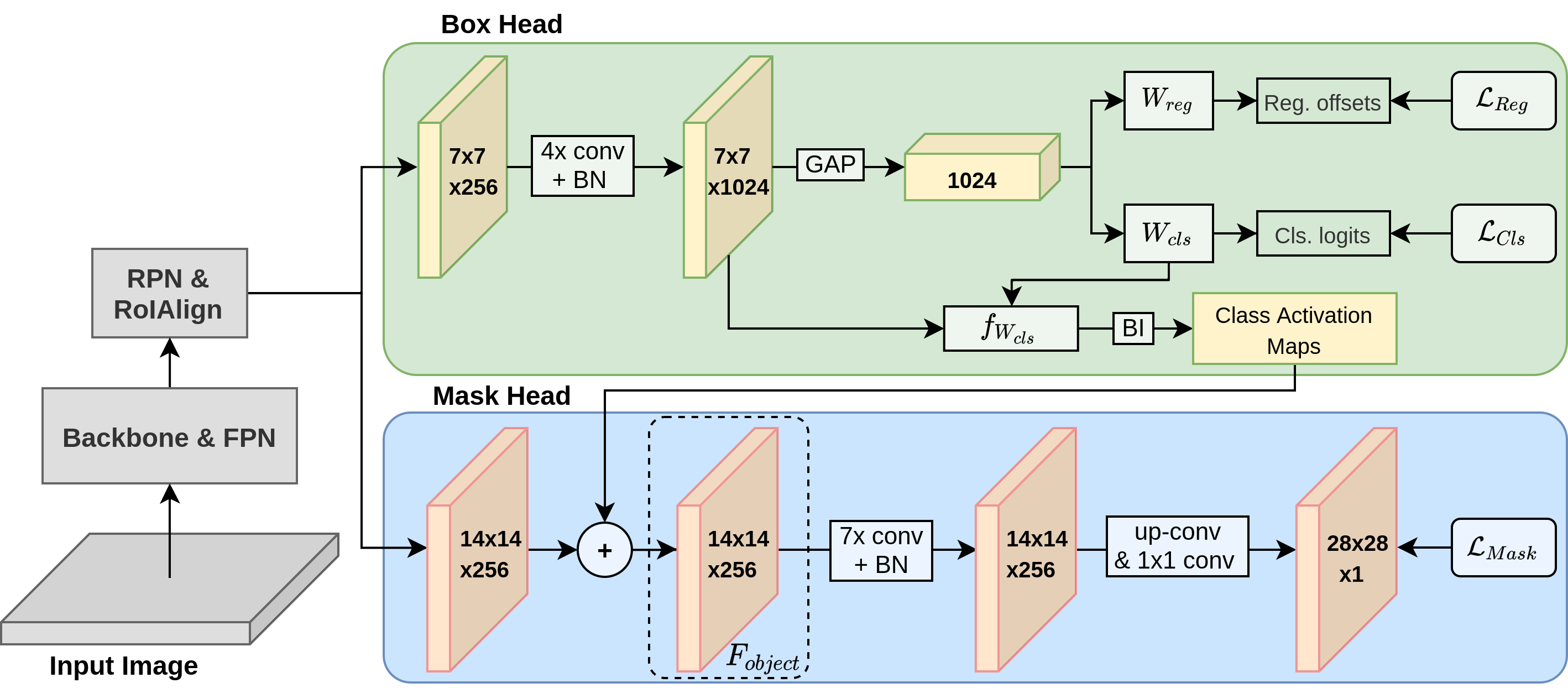
My roots are in computer vision research. I did a research master's in Artificial Intelligence at the University of Amsterdam and wrote my thesis on partially supervised instance segmentation with TomTom's autonomous driving team, which turned into a first-author paper at ICCV 2021. Before that, I studied Human-Computer Interaction in Hamburg and spent a lot of time with robots and VR headsets.
I'm happiest where applied science, ML engineering and software engineering meet: taking an ambiguous problem across research, product and engineering teams all the way to a shipped system (which earned me an org-level leadership award). Lately I've been building coding agents that run our core processes locally and in ephemeral environments, check their results in GIS sessions, and iterate on problems on their own. I'm also part of TomTom's cross-org AI mentoring group.
I'm drawn to problems where new ML research has to become a dependable product, especially in perception and generative modelling. I'm also very excited about efficient computer vision that runs in real time on edge devices, and about physics-based machine learning. These days I'm especially curious about diffusion models seen through the lens of statistical physics: rare events, transition paths, and the thermodynamics of learning.
If you want to talk, feel free to reach out by email: david (dot) biertimpel (at) protonmail (dot) com.
*University of Amsterdam, †TomTom
ICCV 2021
*University of Hamburg, ‡Istituto Italiano di Tecnologia, †University of Amsterdam
Neural Computing and Applications 2020
Selected personal projects, and course and team projects from my studies.
Interactive browser simulation that animates how an LLM inference stack serves requests across routing, continuous batching, paged KV cache, memory tiers, and autoscaling.
Personal project, 2026
Extends ConvKNRM, PACRR, and BERT document rankers to incorporate clarifying questions and user answers on the Qulac conversational search dataset, and analyzes ranking performance across answer polarities.
University of Amsterdam, 2020
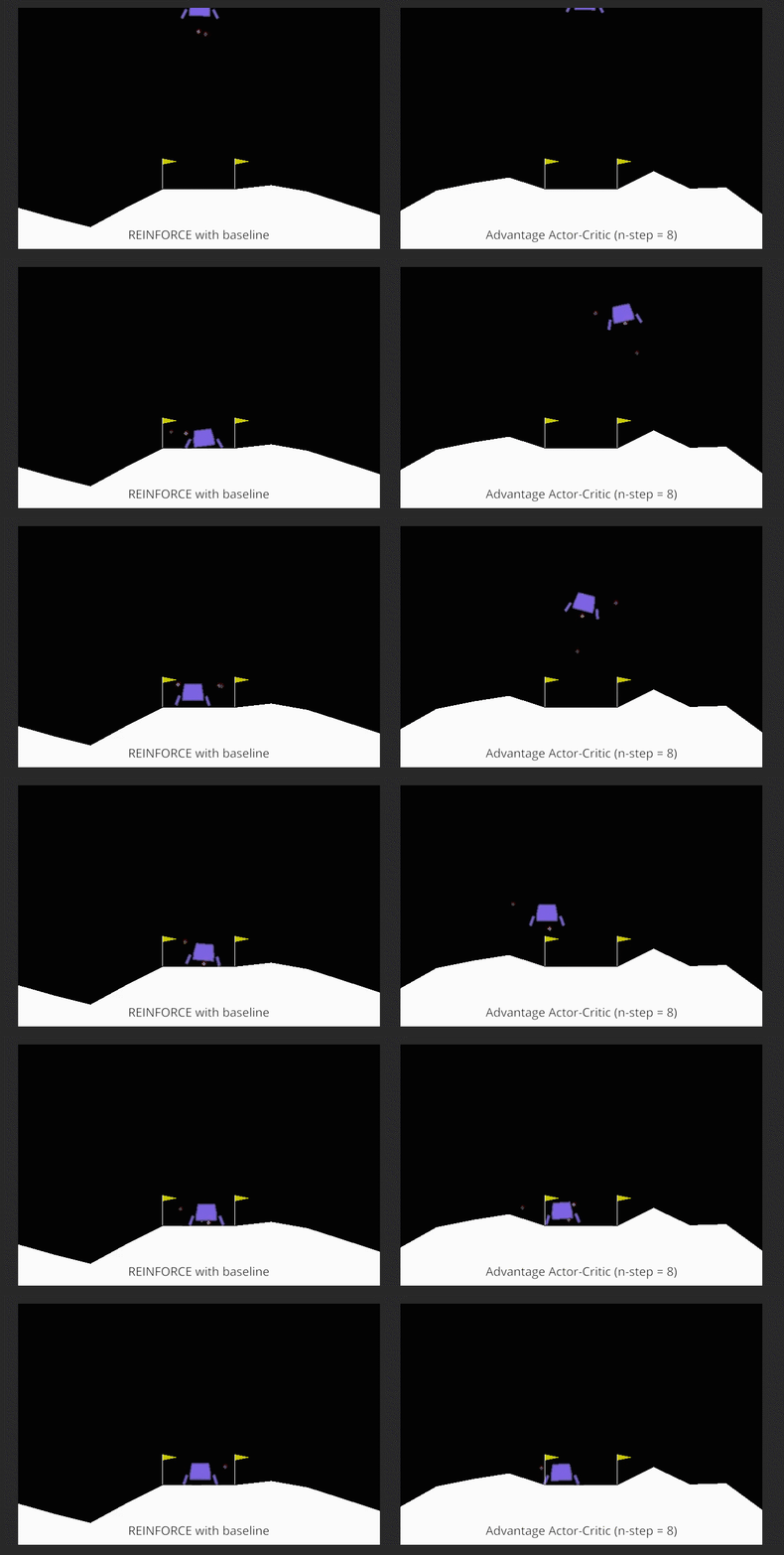
Studies the bias-variance trade-off in actor-critic reinforcement learning by comparing n-step bootstrapping returns from one-step TD to Monte Carlo across OpenAI Gym environments.
University of Amsterdam, 2019
Pairs a Leap Motion sensor with an HTC Vive controller via a 3D-printed mount and a networked Unity environment for unrestricted, controller-free hand tracking in multi-user VR.
University of Hamburg, 2018
An interactive visual tour of how diffusion models generalise before they memorise — using fixed pixel permutations to see why spatial locality opens the generalisation window from the left rather than blocking memorisation, and why fixed-budget onset curves can mislead.
Comparing n-step bootstrapping returns, from TD(0) to Monte Carlo, in actor-critic methods across several Gym environments.